

Flying ants vs termites: how to tell them apart
Published Updated
 By John Stopka, Co-Founder & CEO · Reviewed by John Stopka
Look at the antennae, the waist and the wings. Termite swarmers have straight antennae, a thick waist and two pairs of wings the same length, while flying ants have bent antennae, a pinched waist and front wings longer than the back wings [1][2][3]. Termite swarmers inside a home almost always mean the house has termites, so get an inspection [1][2].
How do you tell flying ants from termites?
Check three body parts: the antennae, the waist and the wings [1][2][3].
| Feature | Termite swarmer | Flying ant |
|---|---|---|
| Antennae | Straight | Bent, with an elbow |
| Waist | Thick, about the same width from front to back | Narrow and pinched |
| Wings | Two pairs, both the same length | Front pair longer than the back pair |
| Wing look | Whitish and filmy, lying parallel | Clear, with light veins |
The differences are small. University of Illinois Extension notes that an actual insect is often needed to be sure, looked at with a hand lens or microscope [4].
Why do flying ants and termites show up at the same time?
Both swarm to start new colonies, and their seasons overlap. Swarmers are the winged males and females that leave a colony to mate and spread [1][5].
In Kentucky, termite swarmers usually appear between March and May, depending on temperature and rainfall [2]. They often take off on a sunny spring day after a rain [5]. Some ants swarm in the same period, which is why the two get mixed up [5].
In Illinois, termites usually swarm in spring, but swarms can happen during most warm months [4].
Our inspectors see termite swarms in Western Kentucky and Southern Illinois from March to May.
What does it mean if termite swarmers are inside your house?
It almost always means the home has a termite infestation [1][2].
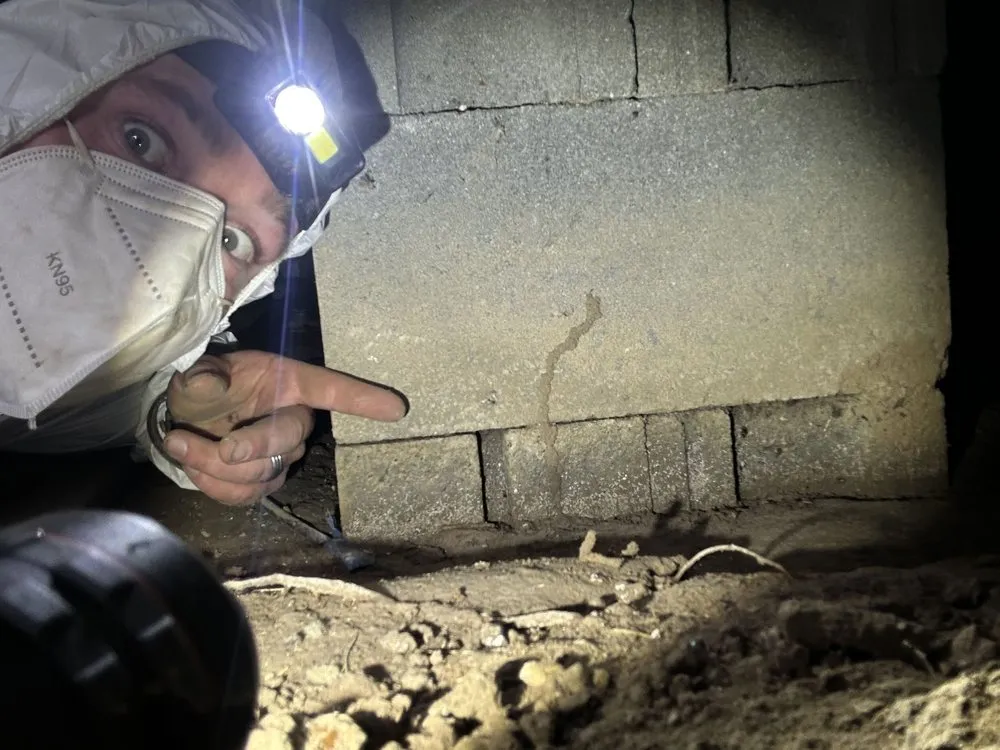
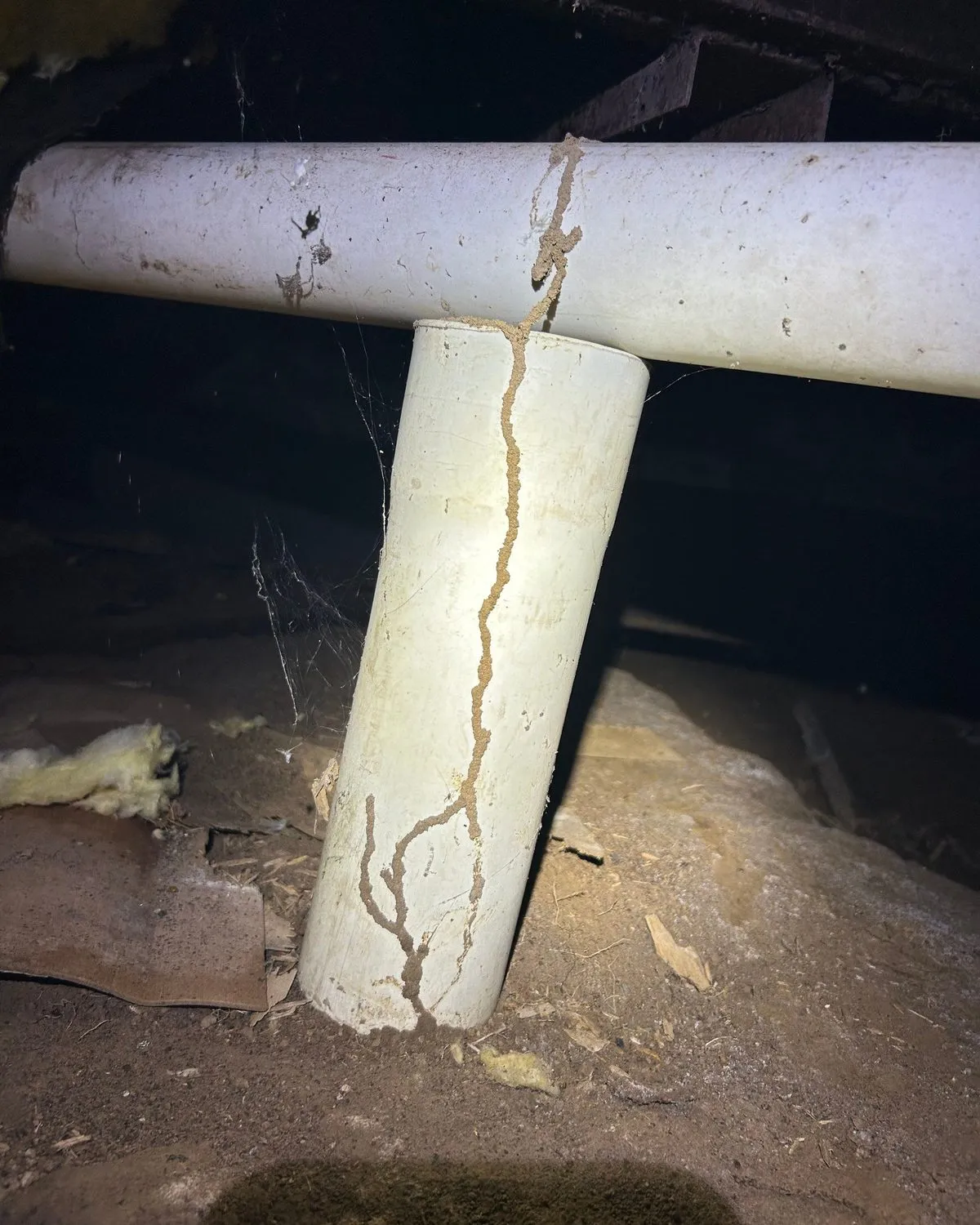
The swarmers themselves can't damage wood, and they live only about a day [1]. The concern is the colony they came from.
A swarm outside, from a tree stump or woodpile, doesn't necessarily mean your house has termites. Swarmers coming up next to the foundation, or from a porch or patio that touches the house, are more of a concern [1].
Other signs of termites include [1][2]:
- Mud tubes about as wide as a pencil on foundation walls, piers, sill plates or floor joists
- Wood hollowed out along the grain, with soil in the tunnels
- Tiny holes in drywall or plaster with bits of soil around them
- Rippled or sunken spots behind wall coverings
What does it mean if flying ants are inside your house?
Winged ants inside usually mean an ant nest is nearby [6]. The colony may be under the slab, with ants finding their way up along heating ducts or plumbing [3]. Ants that swarm indoors are unlikely to start a new colony inside [6].
Carpenter ants deserve a closer look. Finding a lot of winged carpenter ants indoors in spring points to a nest inside the home [7]. Carpenter ants are larger ants, black or red and black, with a single node at the waist and an evenly rounded middle section [7]. Small piles of sawdust-like debris are another sign [7].
What should you do when you find a swarm?
Stay calm. You can sweep or vacuum up the insects [1][3].
- Keep a few of the insects so they can be identified [4].
- Note where you found them.
- If they might be termites, get a professional inspection.
There's no need to rush a decision about treatment. Termites damage wood slowly, so taking a few extra days or weeks to choose a company usually won't make a real difference [1].
What does Liberty check when you find winged insects?
We start with what the insects could be.
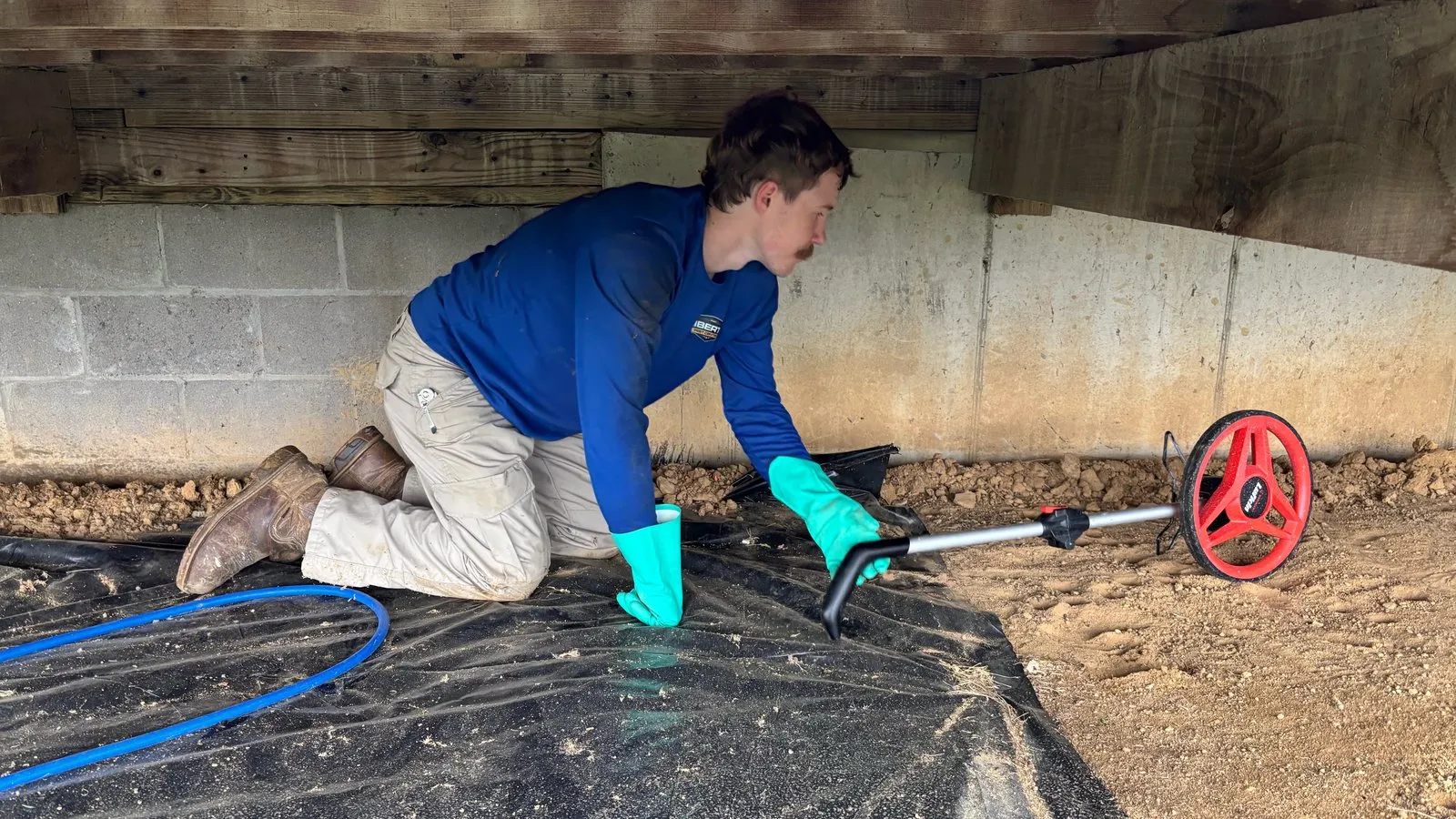
Possible termites. At a free termite inspection:
- Your Service Advisor looks over your home for signs of termites, like mud tubes and wood damage.
- They also look for things that attract termites, like wood touching soil or moisture problems.
- They ask about your concerns and explain what they found.
Household ants. Workers have no wings. Winged ants may show up when a colony swarms.
Carpenter ants. Carpenter ant treatment starts with a free inspection. A local Service Advisor does a thorough inspection to see how bad the problem is, where the ants are getting in and nesting, and what draws them, like damp or softened wood, leaks and branches touching the house.
Signs to watch for:
- Small piles of sawdust-like shavings below wood trim, windows or beams
- Winged ants coming from walls, ceilings or window frames
If you text us a photo of winged insects, get close enough to show the antennae, the wings and the body segments, including the waist. Those are the features that tell a termite from an ant [1][2][3].
When to call a professional
Call if you find winged insects inside and aren't sure what they are, or if you see mud tubes or damaged wood.
Liberty's termite control starts with a free termite inspection. Learn more on our termite control page.
If they turn out to be ants, see our ant page. Household ants are covered by every Liberty pest control plan. Carpenter ants aren't part of our plans and start with a free inspection.
Common questions
Do flying ants mean you have termites?
No. Flying ants are ants, not termites. Ants have bent antennae, a pinched waist and front wings longer than the back wings, while termite swarmers have straight antennae, a thick waist and equal wings [1][3].
What do termite swarmers look like?
Termite swarmers are winged insects with straight antennae, a thick waist and two pairs of whitish wings that are the same length [1][3].
When do termites swarm in Kentucky?
In Kentucky, termite swarmers usually appear between March and May, depending on temperature and rainfall. They often fly on a sunny spring day after a rain [2][5].
Can termite swarmers damage my house?
The swarmers themselves can't damage wood and live only about a day. But swarmers inside a home almost always mean there's a termite infestation that needs attention [1][2].
Can I just vacuum up a termite swarm?
Yes, you can sweep or vacuum up the swarmers. The colony they came from is still there, though, so get a termite inspection [1].
Sources
- University of Kentucky Entomology. "ENTFACT-604: Termite Control: Answers for Homeowners." https://entomology.mgcafe.uky.edu/ef604 (opens in a new tab)
- Kentucky Pest News, University of Kentucky Entomology. Zach DeVries, "Time for Termites!" April 23, 2024. https://kentuckypestnews.wordpress.com/2024/04/23/time-for-termites/ (opens in a new tab)
- University of Illinois Extension. Richard Hentschel, "Swarming Insects this Season." June 5, 2019. https://extension.illinois.edu/blogs/over-garden-fence/2019-06-05-swarming-insects-season (opens in a new tab)
- University of Illinois Extension. Christopher Enroth, "Termite Troubles: Three tips for preventing infestations." July 26, 2024. https://extension.illinois.edu/blogs/good-growing/2024-07-26-termite-troubles-three-tips-preventing-infestations (opens in a new tab)
- Kentucky Pest News, University of Kentucky Entomology. Lee Townsend, "Termite Season." April 12, 2016. https://kentuckypestnews.wordpress.com/2016/04/12/termite-season/ (opens in a new tab)
- University of Kentucky Entomology. "Ant Control for Householders." https://entomology.mgcafe.uky.edu/ef619 (opens in a new tab)
- University of Kentucky Entomology. "ENTFACT-603: Carpenter Ants." https://entomology.mgcafe.uky.edu/ef603 (opens in a new tab)