

Signs of termites in your home, and what each one means
Published Updated
 By John Stopka, Co-Founder & CEO · Reviewed by John Stopka
Termites work out of sight, so almost every sign you can see is indirect: pencil-wide mud tubes on foundation walls and floor joists, shed wings on windowsills and along the edges of floors, wood hollowed out along the grain with soil in the tunnels, and rippled or sunken patches behind wall coverings [1][2]. Any one of them is worth an inspection, and because termites damage wood slowly, you have time to arrange one properly [1][3].
What are the signs of termites?
There is no single obvious one — just a short list of small things, each evidence of something happening somewhere else.
- Mud tubes. Pencil-wide mud foraging tunnels on foundations, piers, sills and joists [2].
- Shed wings. On windowsills and along the edges of floors [2].
- Damaged wood. Hollowed out along the grain, lined with bits of mud or soil [2].
- Pinholes with soil. Tiny holes through drywall or plaster, with soil around the margin [1].
- Uneven walls. Rippled or sunken traces behind wall coverings [1].
What do termite mud tubes look like?
Earthen tubes about the diameter of a pencil, sometimes thicker, running over foundation walls, support piers, sill plates and floor joists [1] — anywhere between the soil and the wood.
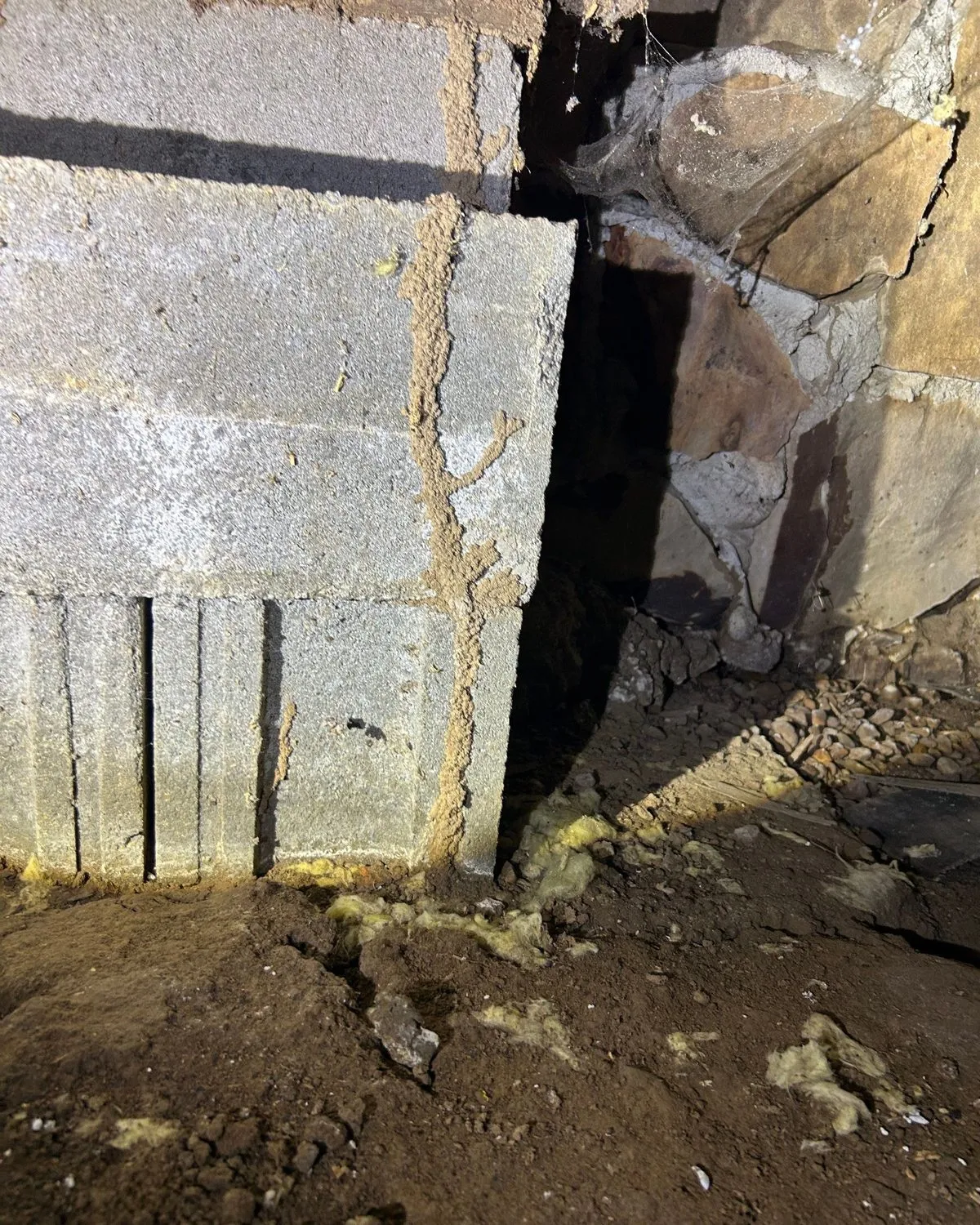
Termites build them for shelter as they travel between their underground colonies and the structure [1]. A tube is a covered road, not a nest — which is why they show up in crawlspaces and along block foundations.
Break one open: small, creamy-white workers inside suggest the infestation is active [1]. An empty tube proves nothing, though — termites often abandon sections of tube while foraging elsewhere [1].
Why are there wings on my windowsill?
Because swarmers shed them. Winged termites leave the colony, drop to the ground, shed their wings and pair off to start new colonies [1]. They are drawn to light, so the wings collect around windows and doors, and along the edges of floors [1][2].
A small heap of identical wings with no insects attached is easy to sweep up without thinking twice. It shouldn't be: winged termites indoors almost always indicate an infestation warranting treatment [1].
This is the one sign with a season attached. Our termite swarm season article covers the timing, and flying ants vs termites covers telling the two insects apart.
What does termite-damaged wood look like?
Hollowed out along the grain, with bits of dried mud or soil lining the feeding galleries [1]. The soil identifies it: wood damaged by moisture or by carpenter ants will not look like that [1].
The harder problem is that damaged wood often does not look damaged. Termite feeding and damage can progress undetected in exposed wood because the outer surface usually remains intact [1].
So a joist or a door frame can be tunnelled through while its painted face looks sound — which is why the damage is usually found only when something breaks through it.
Can termites show through a wall?
Sometimes, in two ways worth recognising.
Termites occasionally bore tiny holes through drywall or plaster, with bits of soil around the margin [1]. A pinhole on its own means little; a pinhole with dirt around it is different.
The second is rippled or sunken traces behind wall coverings, where termites are tunnelling underneath [1]. On a painted wall that reads as a patch that is slightly uneven or depressed under raking light — usually blamed on damp or a bad patch job.
Why are termite signs so easy to miss?
Because termites are cryptic creatures, and infestations can go undetected for years, hidden behind walls, floor coverings and insulation [1]. Often there is no clear indication of infestation at all [1].
Detecting a hidden infestation requires a trained eye [2], and University of Kentucky entomologists are blunt that even the most experienced inspector can overlook signs that are hidden [1]. Which is why the faint ones matter: they are most of what a homeowner gets. Kentucky Pest News is direct about it — it is critical that the signs not be overlooked and that trained professionals be consulted [3].
I found one sign. Is it an emergency?
No, but it is not nothing either. Where termite infestation signs are observed, they are usually indicative of a larger termite problem [3] — the visible part is a fraction of what is there.
Then take your time. Termites damage wood slowly, and an extra day, week or month spent making an informed decision is generally inconsequential [1][3] — room enough to get more than one inspection [1].
Before anyone comes out, leave the evidence where it is. Don't scrub the tube off the wall or bin the wings, and note where you found it.
How does Liberty check the signs of termites?
Termites eat wood from the inside, and by the time damage shows it has usually been going on a while.
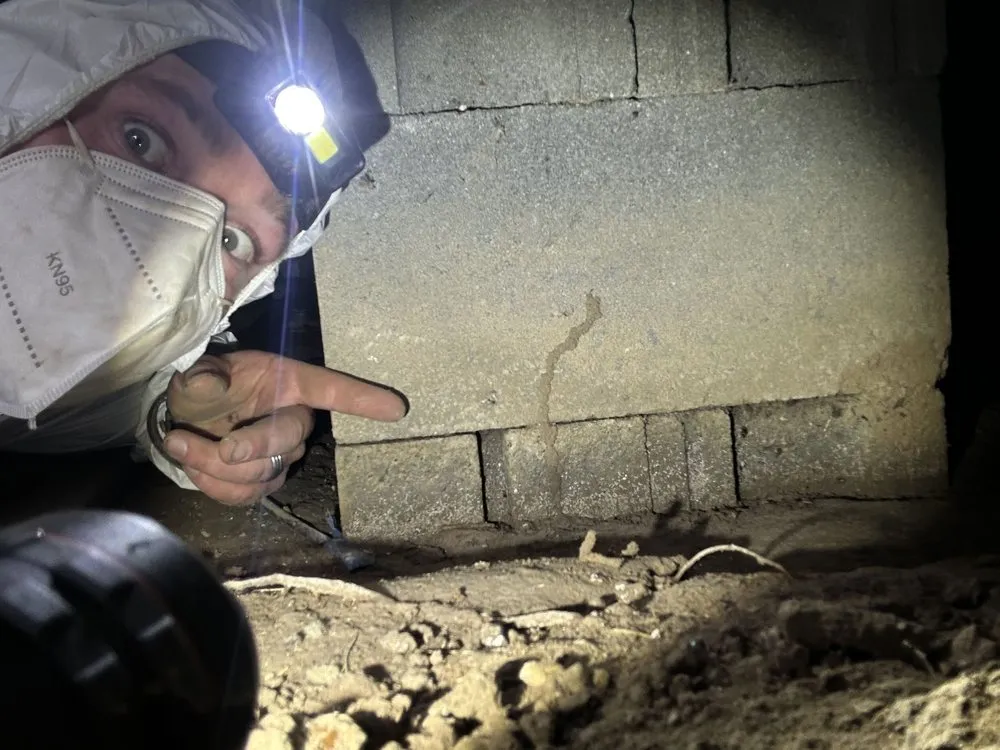
The short list we give homeowners, including the one you can hear rather than see:
- Mud tubes on foundation walls, piers or in the crawlspace
- Small piles of discarded wings near windows or doors
- Wood that sounds hollow when tapped
- Swarms of winged insects inside the home
We'll look for signs of termites and talk through your options. It's free, and anyone can book one.
- Your Service Advisor looks over your home for signs of termites, like mud tubes and wood damage.
- They also look for things that attract termites, like wood touching soil or moisture problems.
- They ask about your concerns and explain what they found.
Buying a home? A WDI (wood-destroying insect) inspection is done when a home is being bought or refinanced. We check for visible evidence of termites and of damage from carpenter bees and carpenter ants.
When to call a professional
Call when you find any of it: a mud tube, a pile of wings, wood that gives way, a soil-flecked hole in the drywall. You don't need to be sure what it is — that is the inspection's job.
Liberty's termite control starts with a free termite inspection. If you are buying or selling, see our WDI inspection page.
Common questions
What is usually the first sign of termites?
Usually mud tubes, or swarmers and their shed wings, because those appear where people can see them. Damaged wood tends to be found last, since the outer surface of infested wood usually stays intact [1].
Can you have termites and see no signs at all?
Yes. Often there is no clear indication of infestation, because termites are cryptic and can go undetected for years behind walls, floor coverings and insulation [1]. Confirming them takes a trained eye [1][2].
Does an empty mud tube mean the termites are gone?
Not necessarily. Creamy-white workers inside a broken-open tube suggest the infestation is active, but a vacant tube does not mean it is inactive — termites often abandon sections of tube while foraging elsewhere in the structure [1].
How do I tell termite damage from water damage?
Look for soil. Termite-damaged wood is hollowed out along the grain with bits of dried mud or soil lining the galleries, and wood damaged by moisture or by carpenter ants will not have that appearance [1].
If I find termite signs, how fast do I need to act?
Quickly enough to get it inspected, not so quickly that you skip comparing companies. An extra day, week or month spent deciding generally makes little difference [1][3], but visible signs usually point to a larger problem underneath [3].
Sources
- University of Kentucky Entomology. Michael F. Potter. "Termite Control: Answers for Homeowners" (ENTFACT-604). https://entomology.mgcafe.uky.edu/ef604 (opens in a new tab)
- University of Kentucky Entomology. "Protecting Your Home Against Termites" (ENTFACT-605). https://entomology.mgcafe.uky.edu/ef605 (opens in a new tab)
- Kentucky Pest News, University of Kentucky Entomology. Zach DeVries. "Time for Termites!" April 23, 2024. https://kentuckypestnews.wordpress.com/2024/04/23/time-for-termites/ (opens in a new tab)