

Termite swarm season in Kentucky and Southern Illinois
Published Updated
 By John Stopka, Co-Founder & CEO · Reviewed by John Stopka
In Kentucky, termite swarmers usually show up between March and May, depending on temperature and rainfall, often on a sunny day after rain [1][2]. In Illinois, most swarms happen in spring, but they can happen in most warm months [3]. Swarmers inside a home almost always mean an infestation, so get a termite inspection [1][4].
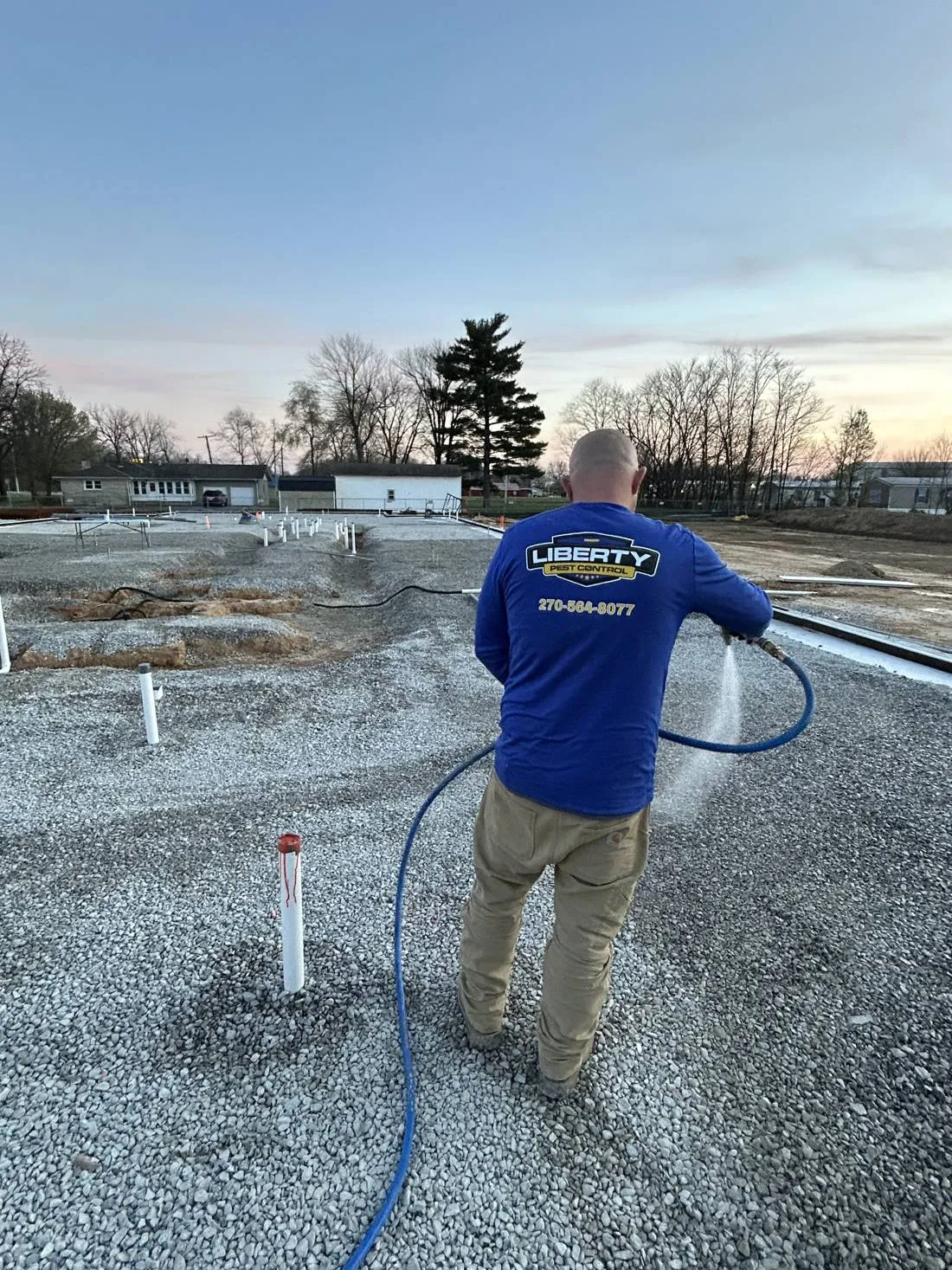
When is termite swarm season in Kentucky and Southern Illinois?
Spring. In Kentucky, winged termites usually appear in homes between March and May, depending on temperature and rainfall [1].
Warmer temperatures and rain set off swarms [4]. Swarmers often leave the ground on a sunny spring day after a rain [2].
In Illinois, spring is the usual time too, but University of Illinois Extension notes that termites can swarm during most warm months of the year [3].
Our inspectors see termite swarms in Western Kentucky and Southern Illinois from March to May.
What is a termite swarm?
A swarm is how a termite colony spreads. Winged males and females, called swarmers, fly out of an established colony to mate and start new colonies [2][4].
The termites that cause trouble for homes in Kentucky are subterranean termites, which live in the soil [4]. In Illinois, subterranean termites are the common kind, and they need high humidity and avoid open air [3].
What does a termite swarm inside your house mean?
It almost always means the home has an infestation that needs treatment [1][4].
The swarmers themselves can't eat or damage wood, and they live only about a day [1][4]. The problem is the colony they came from.
Where the swarm happens matters:
- Inside the house: almost always a sign of an infestation [1][4].
- Next to the foundation, or from a porch or patio that touches the house: more of a concern [4].
- From a stump or woodpile away from the house: doesn't necessarily mean the house is infested [4].
Termites stay hidden, so an infestation can go unnoticed for years [1].
What are the other signs of termites?
Look for mud tubes, hollowed wood and small holes with soil around them [1][4].
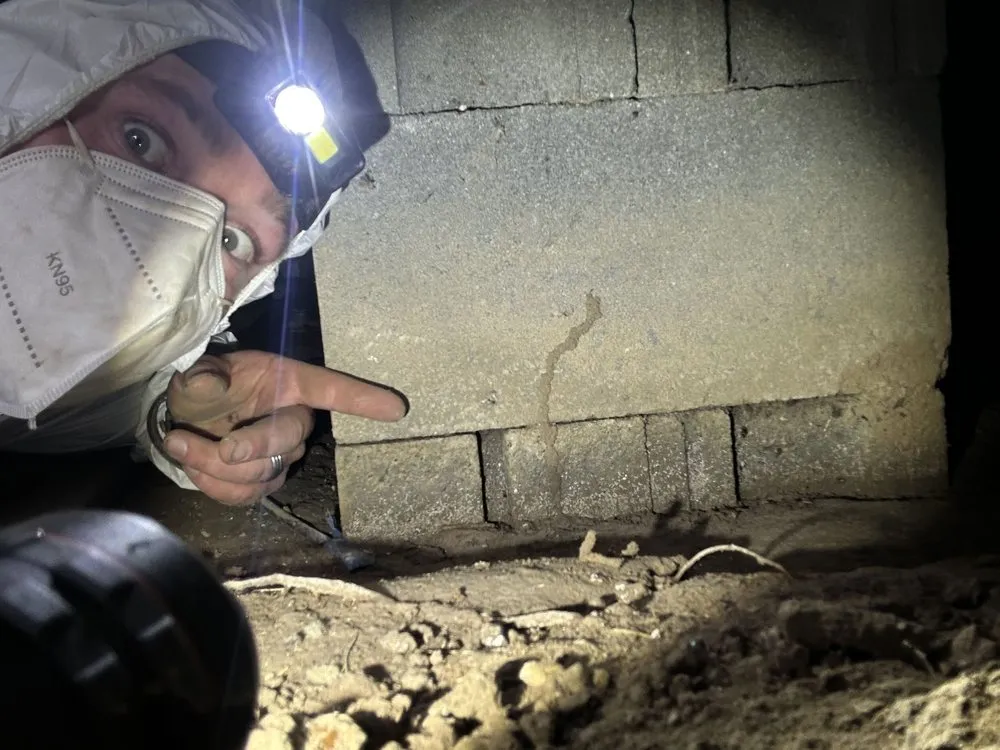
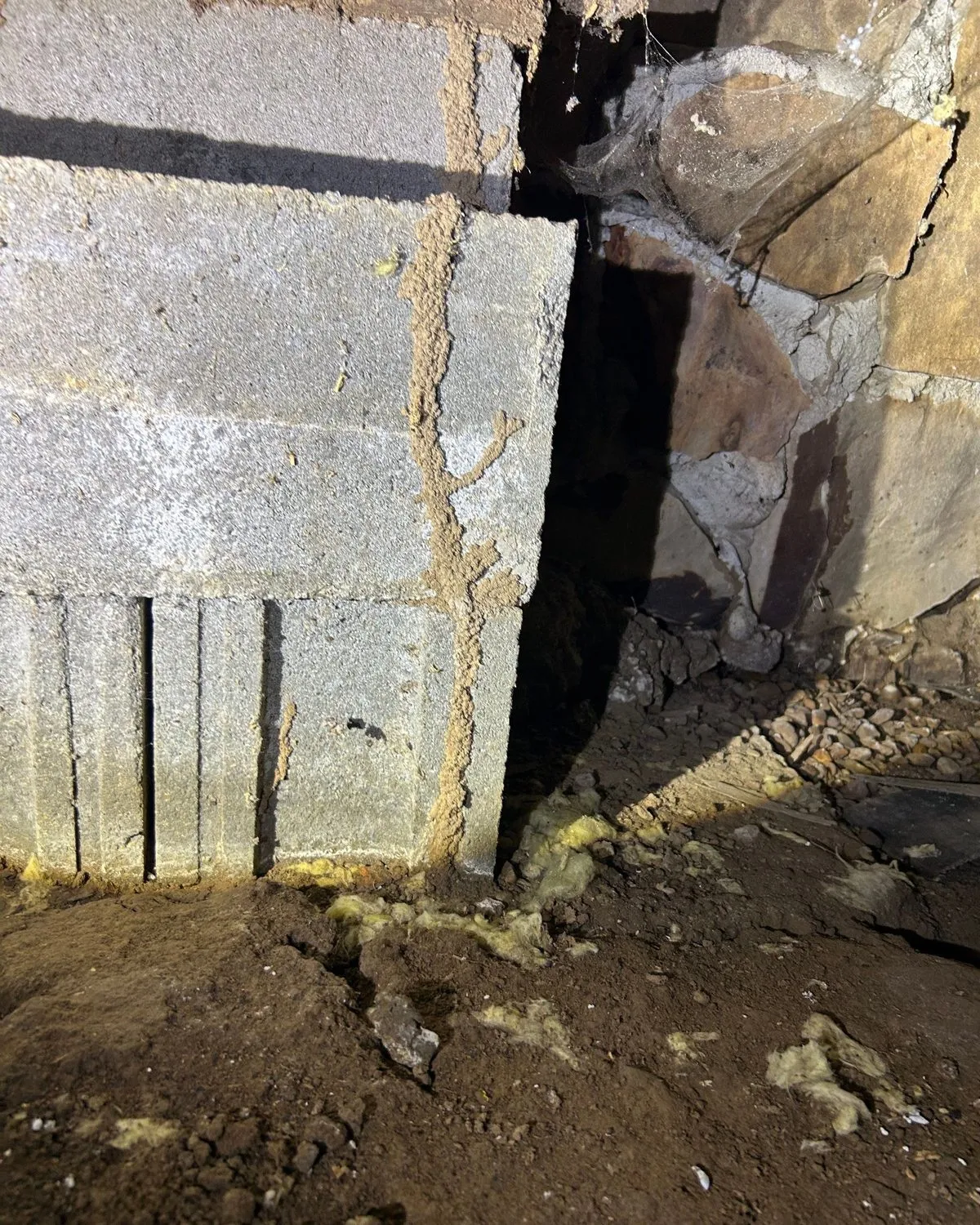
- Mud tubes: earthen tubes about as wide as a pencil, running over foundation walls, support piers, sill plates or floor joists. Termites build them to travel and keep moist [1][3][4].
- Damaged wood: wood hollowed out along the grain, with soil in the tunnels [1][4].
- Holes in walls: tiny holes in drywall or plaster with bits of soil around them [1][4].
- Wall surfaces: rippled or sunken spots behind wall coverings [1][4].
Termite swarmers can look like flying ants. Termites have straight antennae, a thick waist and wings of equal length. Ants have bent antennae, a pinched waist and front wings longer than the back wings [1][4].
What should you do if termites swarm inside?
Don't panic. Sweep or vacuum up the swarmers [4].
Then get a professional inspection. Termite treatment takes skills and equipment most homeowners don't have [1].
You have time to decide. Termites damage wood slowly, so taking an extra day, week or month to choose a company generally makes little difference [4]. University of Kentucky entomologists suggest getting more than one inspection and estimate, and avoiding companies that use pressure tactics [4].
How can you make your home less attractive to termites?
Cut down on moisture and on wood touching the soil. Termites are drawn to moisture [5].
- Use gutters, downspouts and splash blocks to carry water away from the foundation, and grade the soil so it slopes away from the house [5].
- Fix leaking faucets, pipes and air conditioning lines [5].
- Keep wooden parts of the house, like siding, frames, steps and posts, at least six inches above the ground [5].
- Keep mulch to a couple of inches, and don't let it touch wood siding or framing [5]. Illinois Extension suggests keeping a bare strip of soil 12 to 18 inches wide around the foundation [3].
- Don't stack firewood, lumber, cardboard or newspapers against the foundation or in the crawlspace [5].
- Remove stumps and dead roots near the house when you can [5].
- Caulk and seal cracks in the foundation [3].
What happens at a Liberty termite inspection?
We'll look for signs of termites and talk through your options. It's free, and anyone can book one.
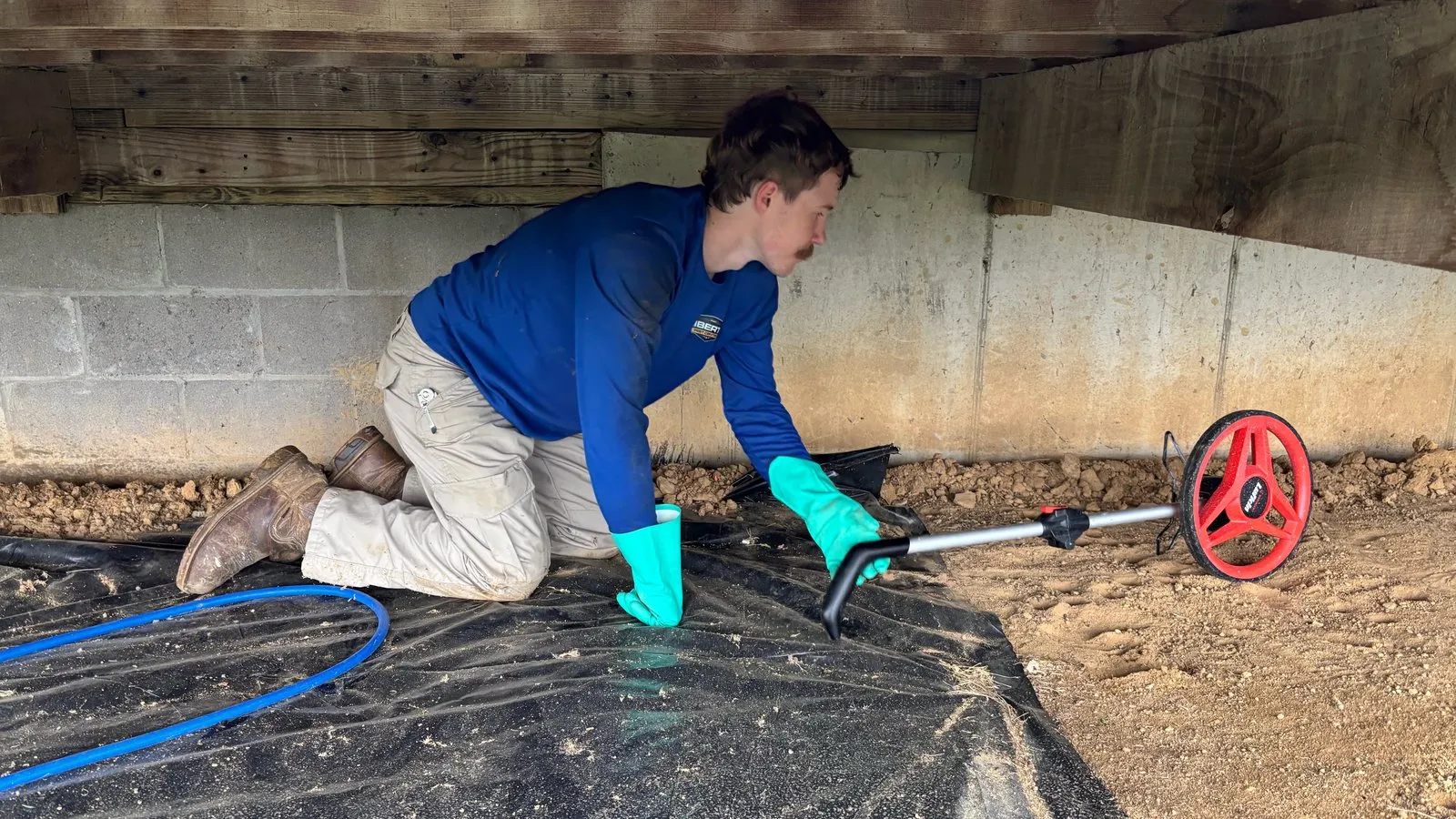
- Your Service Advisor looks over your home for signs of termites, like mud tubes and wood damage.
- They also look for things that attract termites, like wood touching soil or moisture problems.
- They ask about your concerns and explain what they found.
- If treatment makes sense, they go over your options, such as Sentricon or a liquid treatment.
Buying a home? A WDI (wood-destroying insect) inspection is done when a home is being bought or refinanced. We check for visible evidence of termites and of damage from carpenter bees and carpenter ants.
A home buyer who called us wrote:
"I’m currently in the process of buying a home, and after our initial inspection, we were told there might be termite damage."
— Ashley Zinn, Google review
In local homes, our Service Advisors most often find mud tubes in crawlspaces, garages and living rooms.
When to call a professional
Call if you see swarmers inside, mud tubes, or wood that sounds hollow or looks damaged.
Liberty's termite control starts with a free termite inspection. Learn more on our termite control page. Buying or selling a home? See our WDI inspection page.
Common questions
When do termites swarm in Kentucky?
In Kentucky, termite swarmers usually appear between March and May. The timing depends on temperature and rainfall [1].
What weather brings out termite swarmers?
Warm temperatures and rain. Swarmers often leave the ground on a sunny spring day after a rain [2][4].
Do termite swarmers eat wood?
No. Termite swarmers can't damage wood and live only about a day. But swarmers inside a home almost always mean there's an infestation [1][4].
Does a termite swarm outside mean my house has termites?
Not necessarily. Swarms from stumps or woodpiles away from the house don't always mean the house is infested, but swarms next to the foundation or from an attached porch or patio are more concerning [4].
Do I need to treat for termites right away?
You have time to choose carefully. Termites damage wood slowly, so taking a few extra days or weeks to get inspections and compare companies generally makes little difference [4].
Sources
- Kentucky Pest News, University of Kentucky Entomology. Zach DeVries, "Time for Termites!" April 23, 2024. https://kentuckypestnews.wordpress.com/2024/04/23/time-for-termites/ (opens in a new tab)
- Kentucky Pest News, University of Kentucky Entomology. Lee Townsend, "Termite Season." April 12, 2016. https://kentuckypestnews.wordpress.com/2016/04/12/termite-season/ (opens in a new tab)
- University of Illinois Extension. Christopher Enroth, "Termite Troubles: Three tips for preventing infestations." July 26, 2024. https://extension.illinois.edu/blogs/good-growing/2024-07-26-termite-troubles-three-tips-preventing-infestations (opens in a new tab)
- University of Kentucky Entomology. "ENTFACT-604: Termite Control: Answers for Homeowners." https://entomology.mgcafe.uky.edu/ef604 (opens in a new tab)
- University of Kentucky Entomology. "ENTFACT-605: Protecting your Home Against Termites." https://entomology.mgcafe.uky.edu/ef605 (opens in a new tab)