

Do homes in Paducah and McCracken County get termites?
Published Updated
 By John Stopka, Co-Founder & CEO · Reviewed by John Stopka
Short answer
Yes. Subterranean termites live in the soil across Kentucky, and University of Kentucky entomologists call them serious pests of buildings that usually warrant a professional. In Paducah and McCracken County, the signs to watch for are swarmers indoors, pencil-wide mud tubes on the foundation and wood hollowed out along the grain.
Why do termites get into Kentucky homes?
They come up from the soil looking for wood, moisture and shelter. UK Entomology's termite sheet for homeowners is written for "conditions in Kentucky," and it opens by calling subterranean termites "serious pests of buildings" that "usually warrant attention by a professional" [1].
The biggest risk factor is wood touching the ground. UK says "earth-to-wood contact affords termites' easy access to food, moisture and shelter, and direct, hidden entry into the building" [2]. Moist soil along the foundation matters too: termites "are more likely to infest if the soil next to the foundation is consistently moist" [2].
How would I know if my house has termites?
Most people find out one of three ways [1]:
- Swarmers inside. Winged termites coming out indoors "almost always" mean an infestation that needs treatment. They're drawn to light, so look around windows and doors.
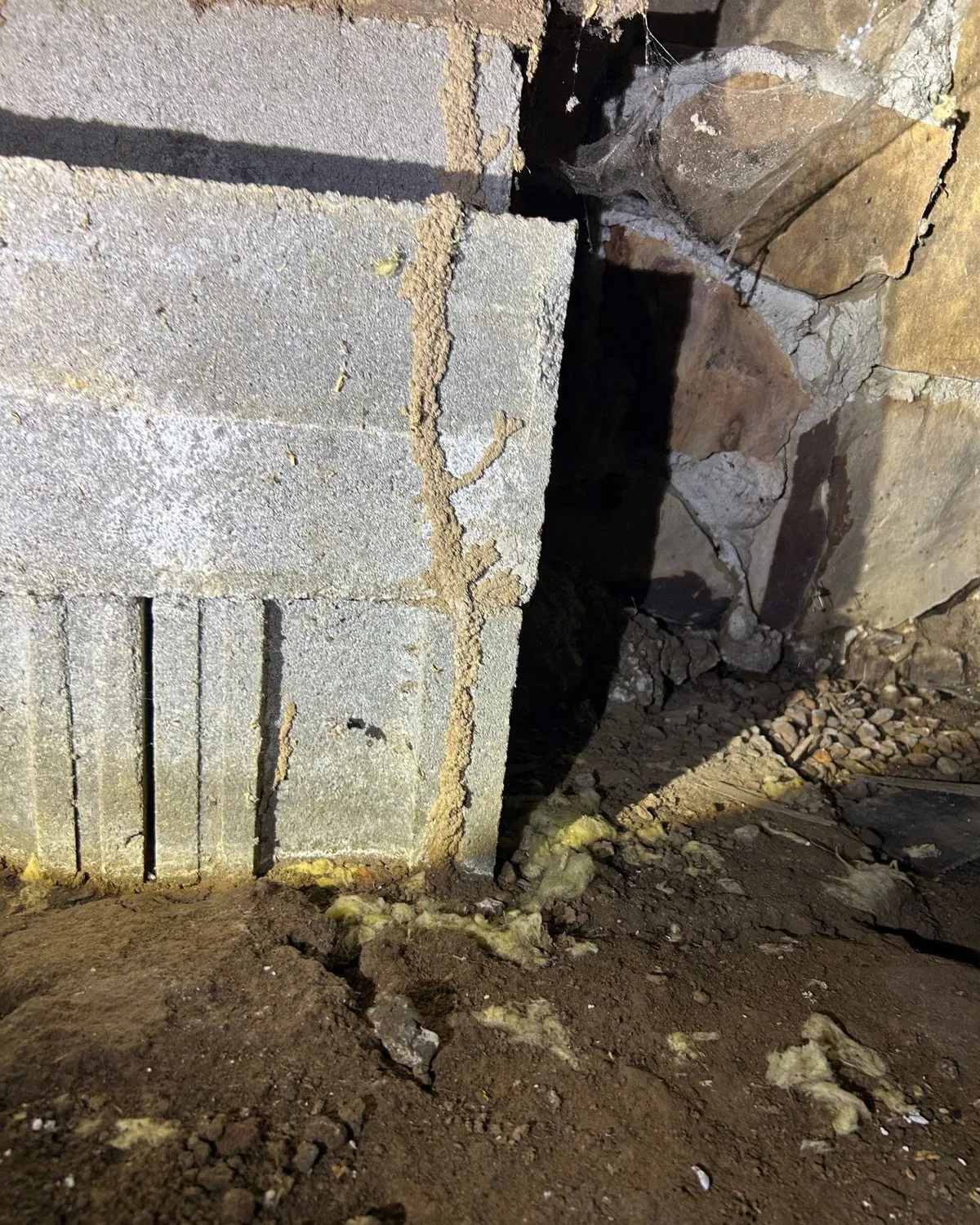
- Mud tubes. Earthen tubes running over foundation walls, piers, sill plates or floor joists, "typically about the diameter of a pencil."
- Hollowed wood. Termite damage is "hollowed out along the grain, with bits of dried mud or soil lining the feeding galleries."
Sometimes there's no sign at all. UK notes infestations "can go undetected for years, hidden behind walls, floor coverings, insulation, and other obstructions" [1]. Our article on the signs of termites goes through each one with photos.
Are those winged bugs termites or ants?
Look at the waist and the wings. UK says termites have "straight antennae, a uniformly thickened waist, and wings of equal size," while ants have "elbowed antennae, constricted waists, and forewings that are longer than the hind wings" [1].
A swarm coming out of a stump or woodpile in the yard doesn't automatically mean the house has termites. Swarmers next to the foundation or coming out of a porch or patio against the house are a different story [1].
Can I treat termites myself?
UK's answer for a home infestation is "It's best not to" [1]. Finding where termites get in takes knowledge of how the house is built, many entry points are hidden, and the work uses specialized equipment. UK adds that do-it-yourself products "will seldom eradicate an existing termite problem" [1].
What you can do is make the house less inviting. UK's prevention list includes keeping wood siding and frames at least six inches above the soil, pulling mulch back from the foundation, keeping gutters and downspouts moving water away and never storing firewood against the house or in the crawlspace [2].
What this means in Paducah
Liberty Pest Control handles termite control for homes and builders in Paducah and the rest of McCracken County, including West Paducah, Lone Oak, Reidland and Hendron, from our office on Benton Road.
A lot of houses here sit on crawlspaces, and plenty have decks, porches, landscape beds and firewood stacked close to the walls. Those are the same spots UK points to: wood near the soil and moisture by the foundation [2]. If you've seen mud tubes on a pier in the crawlspace or wings on a windowsill, that's worth a look.
Every job starts with a free termite inspection, and anyone can book one. Your Service Advisor looks over your home for signs of termites, like mud tubes and wood damage, then goes over your options. Our Paducah page has more on the services we offer here.
When to call a professional
Call if you see swarmers inside, mud tubes anywhere on the house or wood that's hollow with soil in it. Call too if you're buying or selling a home, since UK notes a termite report "is normally a condition of sale" [1]. Our termite control page explains the options, and you can compare our pest control plans for the everyday pests.
More termite answers are on the Termites page.
Common questions
Are termites common in Western Kentucky?
Subterranean termites live in the soil throughout Kentucky. UK Entomology's homeowner guide is written for Kentucky conditions and says its department "receives many calls about termites."
What do termite mud tubes look like?
Earthen tubes about the width of a pencil, running up foundation walls, piers or floor joists. Termites build them for shelter between the soil and the wood they're eating.
Do termite swarmers damage wood?
No. UK says swarmers that come out inside "are incapable of damaging wood and only live for about a day." They do tell you there's a colony nearby, so book an inspection.
Is the termite inspection free?
Yes. Every job starts with a free termite inspection, and anyone can book one.
Sources
- University of Kentucky Entomology. Michael F. Potter. "Termite Control: Answers for Homeowners" (ENTFACT-604). https://entomology.ca.uky.edu/ef604 (opens in a new tab)
- University of Kentucky Entomology. Michael F. Potter. "Protecting your Home Against Termites" (ENTFACT-605). https://entomology.ca.uky.edu/ef605 (opens in a new tab)