

Brown recluse spiders in Western Kentucky: how to identify them and where they hide
Published Updated
 By John Stopka, Co-Founder & CEO · Reviewed by John Stopka
Yes, brown recluse spiders live in Western Kentucky, and University of Kentucky entomologists say infestations get more common the farther west you go in the state [1]. Look for a tan to dark brown spider about the size of a quarter with its legs spread, a dark violin-shaped mark on its back and six eyes in three pairs [1][2]. They hide by day in closets, stored boxes, clutter and furniture, and hunt at night [1][2].
Are brown recluse spiders common in Western Kentucky?
Yes. The brown recluse lives across the south-central and Midwestern United States, and in Kentucky, infestations become more common as you travel west [1].
The spider lives just across the river, too. The Illinois Department of Public Health places its range in roughly the southeastern quarter of the country [2]. University of Illinois Extension calls it a common houseguest in southern Illinois [3].
Common doesn't mean easy to spot. Brown recluse spiders hide during the day and come out at night, so they're easy to miss [1][2][3].
How do you identify a brown recluse spider?
Check four things: size, color, the violin mark and the eyes.
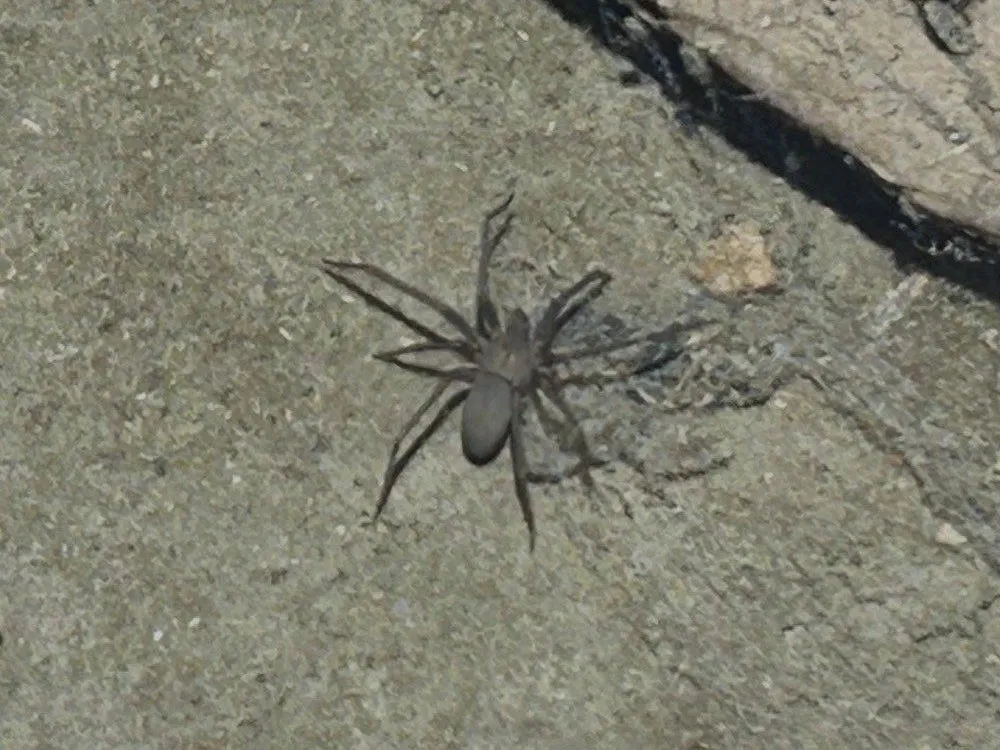
- Size: A grown brown recluse, legs included, is about the size of a U.S. quarter [1].
- Color: Tan to dark brown. The legs and abdomen are one plain color, with no stripes or bands [1][2].
- Violin mark: A dark, violin-shaped mark sits on the back, with the neck of the violin pointing toward the spider's rear [1][2].
- Eyes: Six eyes set in three pairs, in a half circle. Most spiders have eight [1][2][4]. You'll probably need a magnifying glass to see them [1].
The eye pattern is the more reliable check. University of Kentucky entomologists treat it as a more exact sign than the violin mark [1].
What spiders get mistaken for a brown recluse?
Wolf spiders are often confused with the brown recluse [1].
Look at the legs first. Many wolf spiders have banded legs, and banding is a sign the spider isn't a brown recluse [1]. A brown recluse's legs are plain [1][2]. Counting eyes helps too, since the brown recluse has six instead of the usual eight [1][4].
If you can't tell what you've found, a professional inspection can confirm it.
Where do brown recluse spiders hide in a house?
They choose dark, quiet places that people rarely disturb [1][2].
Inside, check:
- Closets, and clothes and shoes left on the floor [1]
- Stored items and cardboard boxes, and the space behind clutter [1][2]
- Behind and under beds and furniture [1][2]
- Corners, cracks and the joint where walls meet the floor [1]
- Behind baseboards and woodwork, above drop ceilings, and inside ducts and registers [1]
- Wall voids and wood framing [2]
Outside, they shelter in barns, sheds and woodpiles, under anything lying on the ground, and behind shutters [1]. The CDC also lists spaces under structures and in piles of rocks or leaves [4].
Do brown recluse spiders build webs?
Not to catch food. The brown recluse is a night hunter that wanders in search of prey instead of waiting in a web [1][2].
During the day, it rests in a hidden retreat [1]. Males and young spiders roam more than females, so they're the ones people run into most [1]. Run-ins usually happen when a spider gets trapped against skin by clothing or bedding [2][4].
How can you make your home less inviting to brown recluse spiders?
Take away their hiding places. These steps come from University of Kentucky and Illinois Department of Public Health guidance [1][2]:
- Cut down on clutter, especially piles of stored boxes and items.
- Keep shoes and clothes off the floor, and shake them out before you put them on.
- Pull beds away from the wall, and take off bed skirts that reach the floor.
- Move firewood and debris away from the foundation.
- Seal cracks and gaps on the outside of the house, and caulk cracks and crevices.
How does Liberty handle brown recluse spiders?
Brown recluse spiders aren't part of our plans. Here's how we handle them. Signs of brown recluse spiders:
- Brown spiders in closets, storage boxes, attics or crawlspaces
- Small, irregular, off-white webs in corners and behind stored items
- Shed skins in undisturbed areas
Brown recluse remediation starts with a free inspection. A local Service Advisor does a thorough inspection to see how many spiders there are, where they are getting in and what gives them places to hide, like clutter, stored boxes, closets, the attic and the crawlspace.
- Vacuum and monitor: Your Service Specialist vacuums webs and spiders and places sticky monitoring boards to see where spiders are active.
- Treat cracks and voids: They treat cracks and gaps, and apply dust in the attic, crawlspace and outlets where needed.
- Outside treatment: They treat around the outside of your home, to help keep more spiders from coming in.
Your Service Specialist sets up your follow-up visits and checks the monitoring boards to see where spiders are still active.
In local homes, our Service Specialists most often find brown recluse spiders in closets, attics, crawlspaces and garages.
When to call a professional
Call if you keep finding brown recluse spiders, or if you've found one and want to know how many more are hiding.
Liberty's brown recluse remediation starts with a free inspection. See how it works on our brown recluse spider page, which is part of Liberty Home Services. For common house spiders, see our spiders page.
Common questions
Are there brown recluse spiders in Western Kentucky?
Yes. The University of Kentucky says brown recluse infestations become more common the farther west you go in Kentucky [1].
Are there brown recluse spiders in Southern Illinois?
Yes. University of Illinois Extension describes the brown recluse as a common houseguest in southern Illinois, and the Illinois Department of Public Health says its range covers roughly the southeastern quarter of the U.S. [2][3]
How can you tell a brown recluse from a wolf spider?
Look at the legs and eyes. A brown recluse has plain legs with no bands and six eyes in three pairs, while many wolf spiders have banded legs [1][2].
Do brown recluse spiders come out at night?
Yes. Brown recluse spiders hunt at night and hide during the day in quiet spots like closets, stored boxes, clutter and furniture [1][2].
What should I do if I think a brown recluse bit me?
Contact a healthcare provider. The CDC and the University of Kentucky both advise getting medical attention after a brown recluse bite [1][4].
Sources
- University of Kentucky Entomology. "Brown Recluse Spider." https://entomology.mgcafe.uky.edu/ef631 (opens in a new tab)
- Illinois Department of Public Health. "Brown Recluse and Black Widow Spiders." https://dph.illinois.gov/topics-services/environmental-health-protection/structural-pest-control/brown-recluse-black-widow-spiders.html (opens in a new tab)
- University of Illinois Extension. "Annoying Encounters." https://extension.illinois.edu/wildlife/annoying-encounters (opens in a new tab)
- Centers for Disease Control and Prevention, NIOSH. "Venomous Spiders at Work." https://www.cdc.gov/niosh/outdoor-workers/about/venomous-spiders.html (opens in a new tab)